

What to Do When a Tenant Stops Paying Rent in Kenya (Landlord's Step-by-Step Guide)
TL;DR / Summary
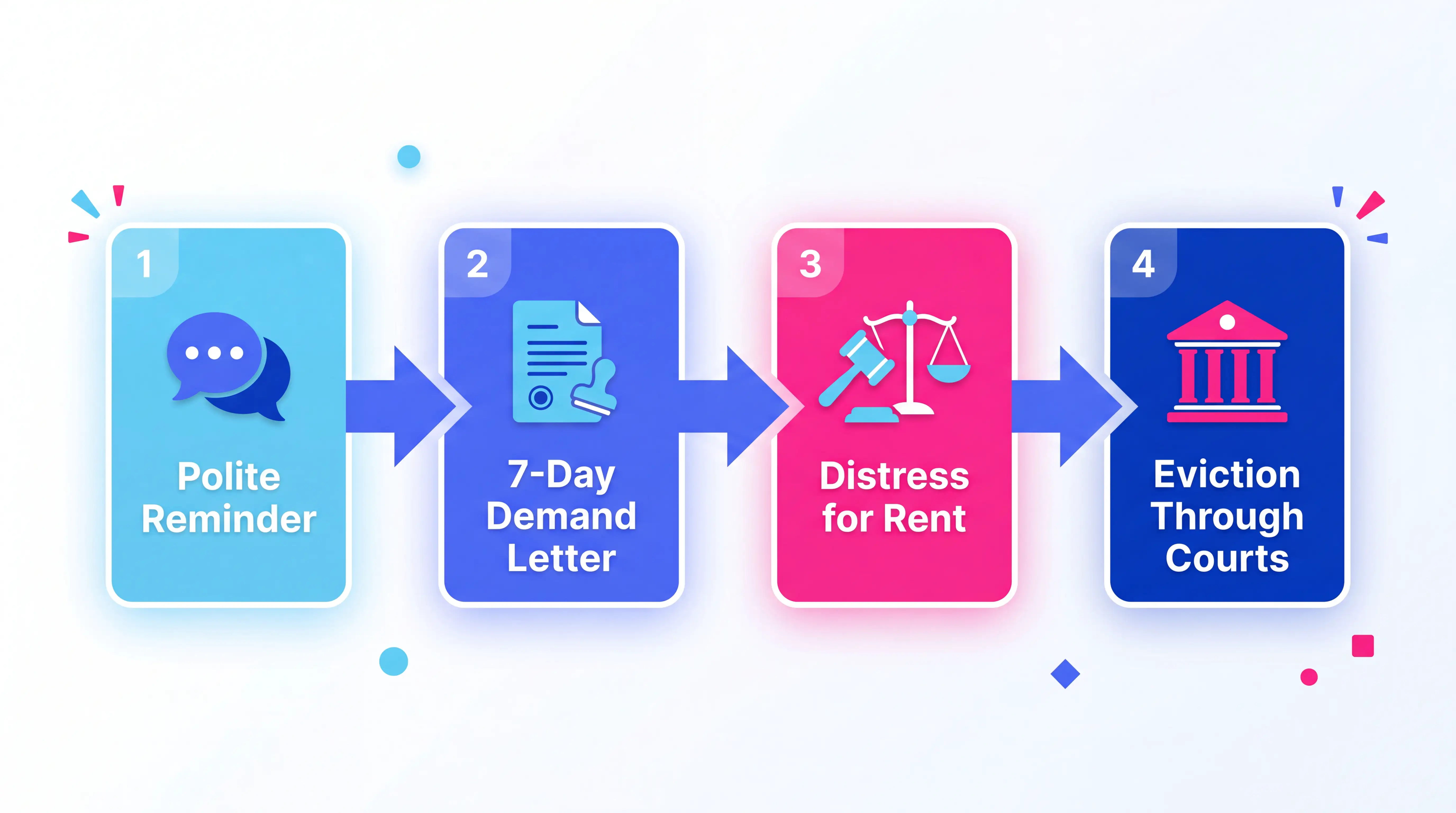
When a tenant in Kenya stops paying rent, the right response follows a legal sequence: a polite reminder first, then a formal 7-day demand letter, then distress for rent through a licensed auctioneer, and only then eviction through the courts. Skip a step, or try to force the tenant out yourself, and you risk turning your case into their lawsuit. Here’s exactly what to do at each stage, in order.
You check your bank account and the rent that’s usually there by the 5th isn’t. You call. No answer. You message. It sits on “read.” A few weeks ago this tenant paid on time, every time. Now they’ve gone quiet, and your investment suddenly feels like a liability.
This is one of the most stressful situations a landlord in Kenya can face, and it’s also one of the easiest to make worse. Some landlords freeze and let arrears pile up for months. Others panic and change the locks or cut the power, which is illegal and can turn you from the wronged party into the one being sued.
The good news: Kenyan law gives you a clear, sequential path to recover unpaid rent, and eventually the property, if the tenant refuses to pay. This guide walks through what to do when a tenant stops paying rent in Kenya, in the order the law expects.
Why the “Silent Tenant” Situation Is Riskier Than It Looks
Most of Nairobi’s rental stock is apartments and flats, and a 2023/24 Kenya Housing Survey analysis found that flats and apartments make up 77.1% of Kenyan rentals, which means the bulk of landlord income in this country depends on consistent, on-time collection from tenants living in shared buildings.
That’s exactly why a rent default feels so urgent. But urgency is not the same as speed. Your instinct might be to confront the tenant, threaten them, or lock them out immediately. Resist it. Kenyan law protects tenants from self-help remedies, and if you skip the legal sequence, the tenant can flip the situation and sue you for illegal eviction, harassment, or unlawful distress, even if they genuinely owe you money.
The safe sequence is: a gentle reminder, then a formal demand letter, then distress for rent through a licensed auctioneer, and only then eviction through the courts. Each step builds the paper trail you’ll need if the case ends up in front of a tribunal or judge. Rush it, and you hand the tenant a legal advantage instead of getting your money back.
What Should You Do in the First 48 Hours After a Tenant Misses Rent?
In the first 48 hours after rent goes unpaid, send a polite, written reminder stating the amount owed, the due date, and a request for an update. Don’t threaten or accuse. This step often resolves the issue immediately, and if it doesn’t, it creates the documented paper trail you’ll need later.
Too many landlords either go silent and let the debt grow, or fire off an angry message that puts them on the back foot. Both are mistakes. Your first move should be calm and professional: a WhatsApp message, an email, or a short letter works. State the facts, and give the tenant the benefit of the doubt. It could be a genuine emergency or an honest mistake.
Sample message: “Hi [Tenant’s Name], hope you’re well. Just following up on the rent for [Month] of [Amount], which was due on [Date]. Please let me know if there’s an issue or when I can expect payment. Thanks.”
This does two things. First, it often solves the problem outright since life happens, and a gentle nudge is sometimes all it takes. Second, and more importantly, it starts your documentation trail. If the case escalates, this is proof you acted in good faith. If the tenant explains a real emergency, you can offer a short written payment plan, but always put any new agreement in writing before you rely on it.
How Do You Send a Formal Rent Demand Letter in Kenya?
A formal rent demand letter in Kenya must state the exact amount owed, the date it was originally due, and a clear seven-day deadline for payment. It should also state the consequence of non-payment, which is usually the start of distress for rent. This letter is the legal foundation for everything that follows.
If your polite reminder goes unanswered and the rent stays unpaid, it’s time to escalate from friendly to formal. This is no longer optional or casual: the letter is a legal document, and it needs to be precise. Vague or emotional letters weaken your position later, so stick to facts, dates, and figures.
Once the seven days lapse without payment or a response, you’re legally positioned to move to the next stage: recovering the debt through distress for rent.

Already past the polite-reminder stage and dealing with real arrears?
This is usually the point where landlords call us in.
Tell Us What You Need
Phone: +254 768 855005
Email: info@simplproperties.co.ke
What Is Distress for Rent and How Does It Actually Work?
Distress for rent is a legal process under the Distress for Rent Act (Cap 293) that lets a landlord recover unpaid rent by having a licensed auctioneer seize and, if necessary, sell a tenant’s movable goods. You cannot do this yourself. Only a licensed auctioneer, instructed by you or your lawyer, is legally allowed to carry it out.
Once you engage an auctioneer, they issue a “proclamation,” a formal notice giving the tenant 14 days to clear the rent arrears plus the auctioneer’s fees. The proclamation lists the tenant’s movable items, equivalent in value to the debt, that are being held as security during this period.
If the 14 days pass with no payment, the auctioneer can legally access the property, seize the proclaimed goods, and advertise them for sale in the daily newspapers. The tenant is responsible for all the costs this generates, including auctioneer fees and storage.
Not everything can be seized. The Distress for Rent Act exempts government property, items already in legal custody, tools of the tenant’s trade in actual use, perishable goods, and a few other categories. If the auctioneer can’t access the property at all, you’ll need a lawyer to apply for a “breaking-in order” from the Business Premises Rent Tribunal (commercial property) or the Rent Restriction Tribunal (residential property).
One thing worth flagging: there has been ongoing discussion around a proposed Landlord and Tenant Bill that would require landlords to obtain a court order before distraining for rent, tightening the current process. It hasn’t replaced the existing law yet, but it’s worth checking the current status with a lawyer before you act, since procedural rules like this do shift.
When and How Can You Legally Evict a Tenant for Non-Payment?
You can legally evict a tenant for non-payment only after issuing a proper termination notice (30 days is standard for residential monthly tenancies), and after a court or tribunal issues an eviction order if the tenant doesn’t leave voluntarily. Only a court bailiff can then physically remove them.
While the distress for rent process is underway, it’s also time to formally end the tenancy. Issue a “Notice to Vacate” or “Lease Termination Notice” according to the terms in your lease agreement. If the notice period lapses and the tenant still hasn’t moved out, your final step is a formal eviction through the courts, not a DIY lockout.
Where you file depends on the property type:
- Magistrate’s Court, for general eviction suits.
- Rent Restriction Tribunal, for “controlled tenancies” on residential properties with standard rent of KSh 2,500 or less.
- Business Premises Rent Tribunal, for commercial properties.
You’ll need your full evidence pack: the tenancy agreement, proof of delivery for every notice you’ve sent, and your rent payment records. If the court or tribunal rules in your favour, it issues an eviction order. Only if the tenant defies that order directly can a court bailiff be brought in to legally remove them. For a full walkthrough of this stage, see this 2025 practitioner’s guide to the eviction process in Kenya.
5 Mistakes That Can Get a Landlord Sued While Chasing Unpaid Rent
This is where landlords who are otherwise in the right lose their case, not because the tenant was blameless, but because the landlord rushed the process. Watch out for these five mistakes:
- Changing the locks or barring the tenant from entering. This is illegal, regardless of how much rent is owed.
- Cutting water, electricity, or other essential services to force the tenant out.
- Seizing or removing the tenant’s belongings yourself instead of using a licensed auctioneer.
- Communicating only verbally, with no written record of reminders, demands, or agreements.
- Moving to eviction before a tribunal or court has actually issued an order.
Any one of these can flip the tenant from debtor to plaintiff. Courts in Kenya take self-help evictions seriously, and a tenant who was illegally locked out can sue for damages even while still owing you rent.
Want to avoid ever making these mistakes in the first place?....
See how Simpl's rent collection service works
Phone: +254 768 855005
Email: info@simplproperties.co.ke
How Simpl Property Management Keeps Rent Defaults From Becoming a Legal Mess
This entire process (reminders, demand letters, auctioneers, tribunals) is exactly what we manage on behalf of landlords every day. Simpl provides full residential and commercial property management across Nairobi, and rent collection sits at the centre of it. We use structured rent reminders, a documented escalation process, and consistent lease enforcement, which is how we maintain a 95%+ rent collection rate across the properties we manage.
For estates and gated communities, we also run HOA and estate management services, so committees don’t have to personally chase individual homeowners for arrears. And because prevention beats recovery, our tenant screening process is built to catch payment risk before a lease is signed, not after.
If you want to understand the full scope of what a property manager actually handles, from rent collection to maintenance to financial reporting, we’ve broken it down in our guide to property management in Kenya. You can also browse more landlord guides on our blog.
Key Takeaways
A rent default is stressful, but it’s rarely a lost cause. Start with a calm reminder, escalate to a formal seven-day demand letter, use a licensed auctioneer for distress for rent, and reserve eviction for the courts. Never take enforcement into your own hands. Patience and documentation protect you far more than anger ever will.
If you’re a Nairobi landlord dealing with a rent default right now, or you’d rather not deal with this process alone in the future, talk to Simpl about rent collection, and find us on Google to see how other Nairobi landlords rate working with us.
Frequently Asked Questions
How many days’ notice is required before distress for rent in Kenya?
After a landlord’s seven-day demand letter goes unanswered, a licensed auctioneer issues a proclamation giving the tenant 14 more days to clear the arrears and auctioneer’s fees before goods can be seized and sold.
Can a landlord evict a tenant without going to court in Kenya?
No. A landlord can issue a termination notice, but if the tenant doesn’t leave voluntarily, the landlord must obtain an eviction order from the Magistrate’s Court, Rent Restriction Tribunal, or Business Premises Rent Tribunal before removal, enforced only by a court bailiff.
What belongings are exempt from distress for rent?
Government property, goods already held by the law, tools of trade actually in use, perishable items, and a small number of other categories are exempt from seizure under the Distress for Rent Act. An auctioneer cannot legally touch these.
What’s the difference between the Rent Restriction Tribunal and the Business Premises Rent Tribunal?
The Rent Restriction Tribunal handles disputes on controlled residential tenancies, generally lower-rent units. The Business Premises Rent Tribunal handles disputes involving commercial properties like shops and offices.
Can a landlord lock out a tenant or cut utilities for non-payment?
No. Changing locks, barring entry, or cutting water and electricity to force a tenant out is illegal in Kenya, even if rent is genuinely owed. Landlords who do this can be sued for damages and illegal eviction.